

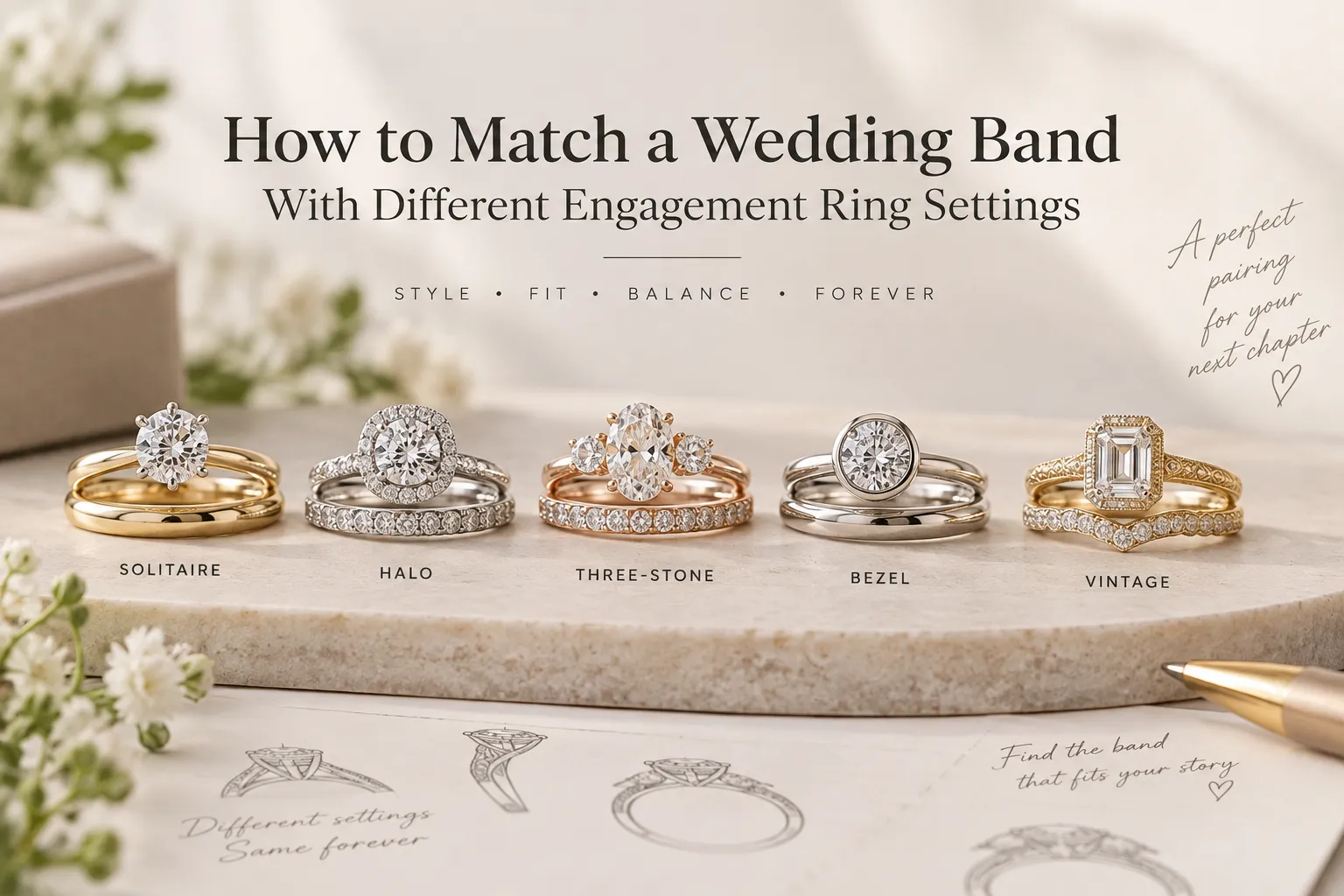
Choosing a wedding band is not always as simple as selecting the same metal as the engagement ring.
The shape, height and structure of the engagement ring can determine whether a straight wedding band sits neatly beside it or whether a curved or contoured design is needed.
For couples who plan to wear both rings together every day, thinking about fit early can make a major difference to comfort and appearance.
Why Engagement Ring Setting Matters
The centre setting is usually the main factor that determines how closely a wedding band can sit beside an engagement ring.
Some rings have a raised basket with enough clearance underneath for a straight wedding band.
Others sit lower on the finger, which may cause the wedding ring to touch the basket or leave a visible gap.
Neither design is wrong, but they create different pairing options.
Solitaire Engagement Rings
Solitaire rings are often among the easiest styles to pair with wedding bands.
If the centre stone is raised enough, a straight band can usually sit closely beside the engagement ring.
Popular combinations include:
- a plain polished wedding band;
- a pavé diamond band;
- a half-eternity ring;
- a fine matching band; or
- a wider contrasting band.
The best choice depends on whether the wearer wants the engagement ring to remain the main focus or prefers more sparkle across the full bridal set.
Low-Profile Solitaire Rings
Low-profile settings can feel comfortable and practical, but they may require more consideration when choosing a wedding band.
If the basket extends outward close to the finger, a straight band may not sit completely flush.
In that case, a gently curved or shaped wedding ring can follow the outline of the engagement ring more naturally.
Hidden Halo Engagement Rings
A hidden halo usually sits underneath the centre stone rather than surrounding it from the top.
Depending on how the basket is designed, a straight wedding band may sit flush or may leave a slight gap.
This is why side-profile images are useful when planning the pair.
For buyers who want a seamless stack, the wedding band should be considered before finalising the engagement ring setting.
Traditional Halo Settings
Halo engagement rings can vary widely in construction.
Some have raised halos that leave plenty of clearance beneath the centre setting, while others sit lower and wider.
A straight wedding band may work well with a raised halo.
A curved band can be a better choice when the halo extends further outward and prevents a straight ring from sitting close.
Trilogy and Three-Stone Rings
Three-stone engagement rings often have more width across the top of the finger than solitaire designs.
This can make wedding-band fit slightly more complex.
The side stones may extend outward and create contact with a straight band.
Depending on the design, a contoured wedding ring may create a more balanced fit.
Bezel-Set Engagement Rings
Bezel settings surround the centre stone with metal and often have a clean, contemporary appearance.
If the bezel is elevated, a straight wedding band may sit comfortably beside it.
Lower bezel designs can require a slight curve.
Because bezel rings often have a more modern aesthetic, they can pair especially well with simple polished or fine diamond-set wedding bands.
Vintage-Inspired Engagement Rings
Vintage-inspired rings may include detailed shoulders, decorative galleries, milgrain or unusual side profiles.
These designs can be more difficult to match with a standard straight wedding ring.
A custom or contoured band can often follow the decorative outline more effectively.
This also allows the wedding ring to complement the engagement ring rather than competing with its details.
Should the Wedding Band Sit Flush?
Many buyers assume a wedding band must sit perfectly flush against the engagement ring.
It does not.
A small intentional gap can look elegant and make each ring easier to appreciate separately.
Some wearers actually prefer this because the two rings feel more distinct.
The important thing is that the spacing looks intentional and feels comfortable.
Curved Wedding Bands
Curved bands are designed to follow the outline of the engagement ring.
They can range from a very subtle curve to a more pronounced contour.
A shallow curve works well when only a small amount of clearance is needed.
More complex engagement-ring settings may require a deeper contour or custom shape.
Plain Wedding Bands
A plain band remains one of the most timeless options.
It can balance a detailed engagement ring and allows the centre stone to remain the main feature.
Plain bands are also practical because they are generally easier to resize and maintain than heavily diamond-set designs.
Diamond Wedding Bands
Diamond-set wedding bands add more brilliance to the bridal set.
Popular styles include:
- pavé;
- shared-prong;
- channel-set;
- half-eternity; and
- full-eternity rings.
The amount of diamond coverage changes both the appearance and practicality of the band.
Half-eternity designs often allow more flexibility for future resizing, while full-eternity rings provide sparkle around the entire finger.
Matching Diamond Shapes
Wedding bands do not need to use only round accent stones.
Emerald, baguette, marquise, oval and other shapes can create more distinctive combinations.
Using a diamond shape already present in the engagement ring can create a cohesive look.
Alternatively, contrasting shapes can make the bridal set feel more contemporary.
Band Width Changes the Overall Balance
Wedding-band width can dramatically influence the appearance of the pair.
A narrow engagement ring with an equally fine wedding band creates a delicate look.
A wider wedding band adds more visual weight and can make the stack feel more substantial.
Some buyers intentionally mix widths for contrast.
The right proportion depends on the hand, engagement-ring size and personal style.
Should the Metals Match?
Matching metals create a consistent appearance, but mixing metals can also work beautifully.
Popular combinations include:
- yellow gold with yellow gold;
- white gold with white gold;
- platinum with platinum;
- rose gold with rose gold; or
- mixed white and yellow metals.
If the rings will touch each other every day, it is also useful to discuss how the chosen metals may wear together over time.
Think About Comfort
A bridal set should feel comfortable when worn for long periods.
Two rings that are individually comfortable may feel different once stacked together.
Consider:
- combined width;
- inside profile;
- stone height;
- edges between the fingers;
- how tightly the rings sit together; and
- whether the bands rotate independently.
Plan for Future Resizing
Finger size can change over time, so resizing is worth considering before choosing the wedding band.
Plain bands and many half-set diamond rings are generally easier to adjust than full-eternity designs.
Highly contoured or intricate wedding rings may also have more limitations.
Understanding this before ordering can prevent problems later.
Consider the Engagement Ring and Wedding Band Together
The easiest time to think about wedding-band fit is before the engagement ring is finalised.
In a custom design, the setting height or side profile may sometimes be adjusted to create more clearance for a future straight band.
This can be useful for buyers who already know they want a flush bridal set.
Compare Different Wedding Band Styles
Looking at several designs can help clarify whether you prefer a straight, curved, plain or diamond-set band.
Collections of wedding bands in New Zealand can provide examples of how different widths, metals and stone arrangements pair with modern engagement rings.
Seeing the options together often makes it easier to identify the balance you prefer.
The Best Pair Should Feel Intentional
A well-matched engagement ring and wedding band do not need to be identical.
They simply need to work together.
That can mean matching metals and widths, or it can mean deliberately combining different textures, shapes or proportions.
The strongest bridal sets are the ones that feel balanced, comfortable and personal to the wearer.
By considering the engagement ring setting, wedding-band shape, width, metal and long-term wear together, couples can create a pairing that looks natural from the first day it is worn.